


Synechococcus sp. T-1
Cyanophyta › Cyanophyceae › Synechococcales › Synechococcaceae › Synechococcus
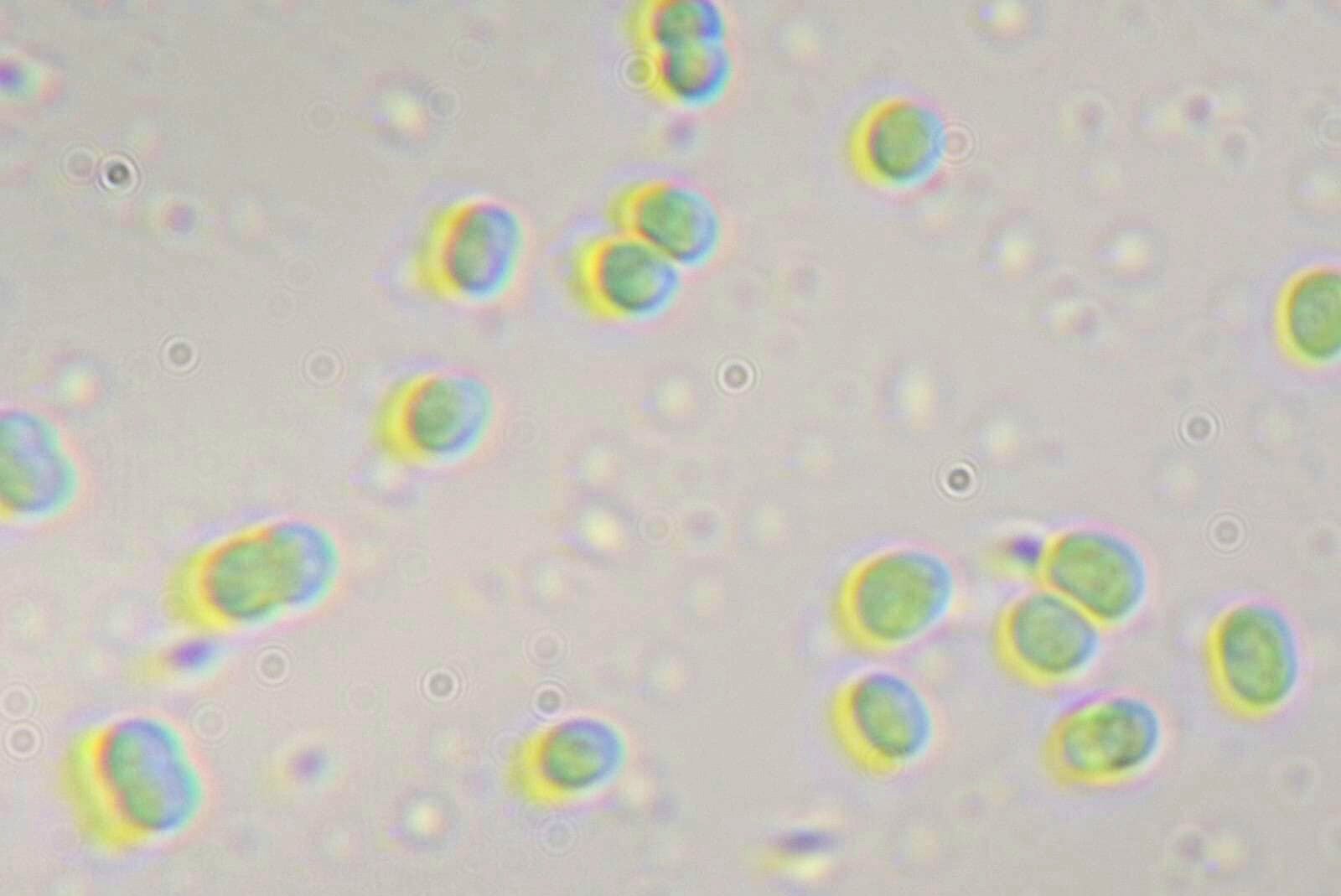
Description
History of Receipt and Isolation
- Country of origin: Republic of Kazakhstan
- Place of isolation: Almaty Region, Chonji district.
- Habitat: thermal springs.
- Isolator(s): Zayadan B.K., Akmukhanova N.R. in the Biotechnology Laboratory of Al-Farabi Kazakh National University.
- Year of accession to the collection: 2009
- Method of obtainment: isolated from an enrichment culture obtained from a natural sample by sequential microbiological streaking
- Genetic features: Wild type (WT)
- Culture state: axenic
Morphology and Structure
Cells are of the prokaryotic type and blue-green in color. The average cell diameter is 1.2 µm, with a cellular biovolume reaching 1.76 µm³. Cells are most often found in groups of 2–4. Cell division is regular; after division, daughter cells sometimes remain attached in chains of two to four cells, at which point the cell biovolume reaches 1.95 µm³.
Cultivation
- Nutrient Medium: Gromov No. 6 medium (liquid and agarized)
- Temperature: 30–40 °C
- Light Intensity: 60–120 µmol photons/m²/s
- Photoperiod: 16:8 h (light/dark)
- pH: 6.5–7.0
Physiological Characteristics
thermophilic, autotroph, nitrogen-fixing. Under optimal cultivation conditions for biomass production (with continuous air supply), on days 7–8, the content of substances per 2.0–2.5 g/L of dry biomass is: proteins – 25–30 %, carbohydrates – 48–56 %.
Long-term Preservation Conditions
maintained on liquid and 1.5–2.0% agarized Gromov No. 6 medium. Storage temperature 10–12 °C, light intensity 10–20 µmol photons/m²/s, photoperiod 12:12 h (light/dark). Subculturing is carried out as needed, but at least once every 2–4 months.
Deposition Information
deposited in 2009 into the Republican Collection of Microorganisms of the RSE "National Center for Biotechnology" of the Republic of Kazakhstan. Registration Number: A-RKM 263
Field of Application
Due to their high carbohydrate content, they are of significant interest as a source of feed protein and as nitrogen fixers.