


Dunaliella salina ZT-1
Chlorophyta › Chlorophyceae › Chlamydomonadales › Dunaliellaceae › Dunaliella
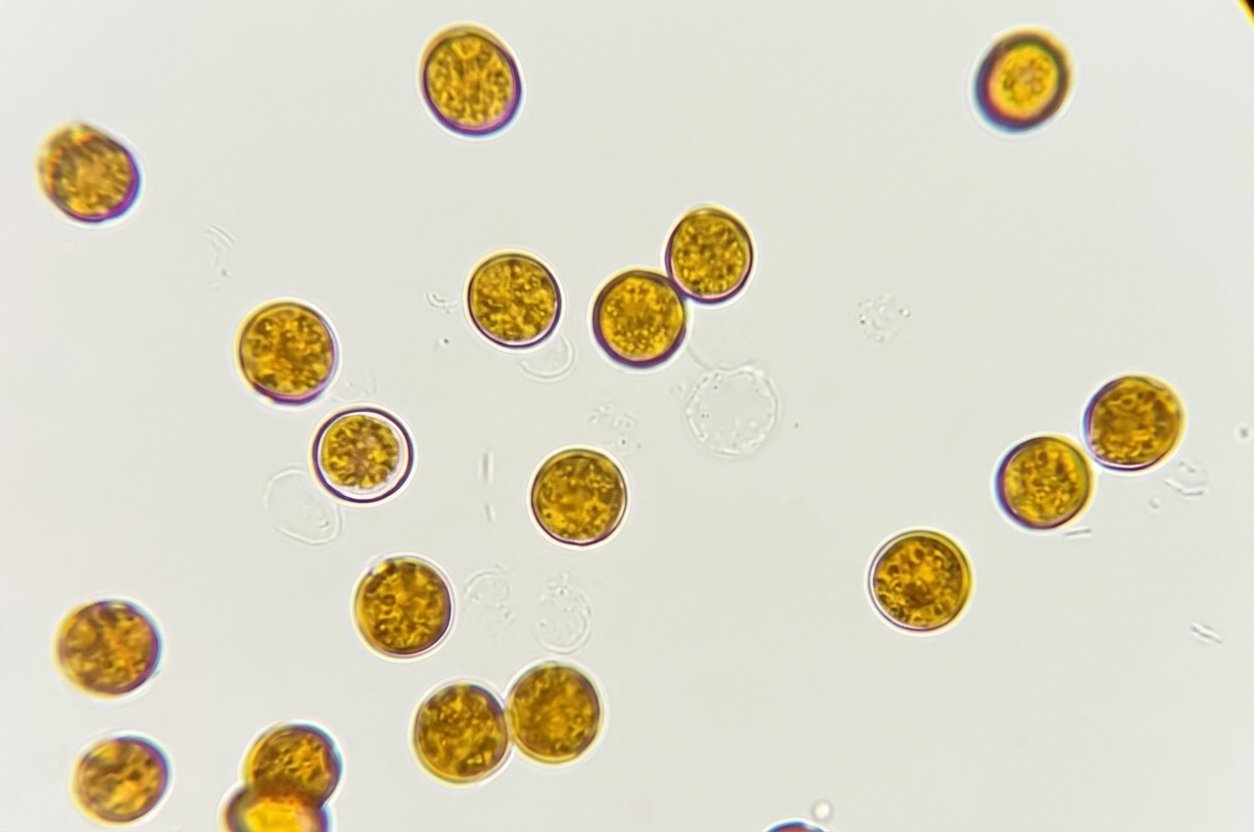
Description
History of Receipt and Isolation
- Country of origin: Republic of Kazakhstan
- Place of isolation: Zhanakorgan, Republic of Kazakhstan.
- Habitat: therapeutic mud and saline water.
- Isolator(s): B.K. Zayadan, A.K. Toktybay K.Bolatkhan at the Biotechnology Laboratory of Al-Farabi Kazakh National University
- Year of accession to the collection: 2022.
- Method of obtainment: isolated from an enrichment culture obtained from a natural sample by sequential microbiological streaking
- Genetic features: Wild type (WT)
- Culture condition: Axenic
Morphology and Structure
unicellular motile green microalga. The cells are oval to ovoid in shape and move by means of two flagella at the anterior end. The strain does not form colonies and occurs as individual free-living cells. Cell dimensions typically range from 8–20 μm in length and 5–12 μm in width, placing the strain within the medium-sized microorganism category (2–20 μm).
Cultivation
- culture medium: Artari mineral medium (liquid and agar-solidified)
- temperature: 25–28 °C
- light intensity: 50–100 μmol photons m⁻² s⁻¹
- photoperiod: 16 h light / 8 h dark
- pH: 7.5–8.5.
Physiological Characteristics
halophilic
Long-term Preservation Conditions
The Dunaliella salina ZT-1 is maintained in liquid and 1.5–2.0% agar-solidified Artari mineral medium. Storage temperature 10–12 °C, light intensity 10–20 μmol photons m⁻² s⁻¹, 12 h light/12 h dark photoperiod. Subculturing is carried out as needed, but at least once every 2–4 months.
Genetic Information
GenBank accession № PX584328
Field of Application
Utilized in fundamental research and biotechnology.
Bibliography
- Sandybayeva S., Kakimova A., Toktybay A., Akhmetova G., Dauletova A., Salauat D., Bolatkhan K. Study of species composition of algoflora from natural therapeutic mud in Zhanakorgan district // Eurasian Journal of Ecology. – 2024. – Vol. 80, No. 3. – P. 119–129. – DOI: 10.26577/EJE.2024.v80.i3-012.