


Chlamydomonas reinhardtii CC-137 Oil S-1
Chlorophyta › Chlorophyceae › Chlamydomonadales › Chlamydomonadaceae › Chlamydomonas
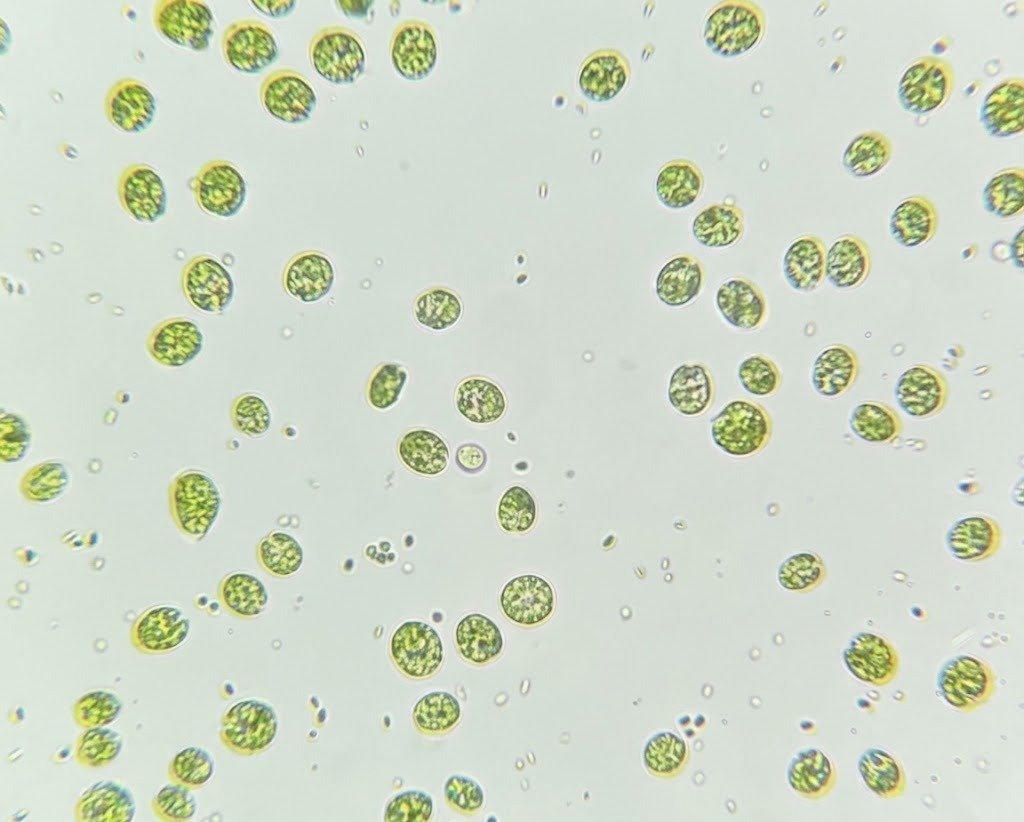
Description
History of Receipt and Isolation
- Country of origin: Russia (parental strain Chlamydomonas reinhardtii CC-137, CALU collection)
- Place of isolation: Biotechnology Laboratory of Al-Farabi Kazakh National University.
- Isolator(s): Zayadan B.K., Akmukhanova N.R., Sadvakasova A.K.
- Year of accession to the collection: 2009
- Method of obtainment: induced mutagenesis and selection (mutagen — UV light, selective factor — petroleum)
- Genetic features: mutant strain
- Strain condition: axenic
Morphology and Structure
unicellular; motile; a globose, wide-ovoid, or slightly ovoid shape and are covered with a very thin shell. The diameter of ordinary vegetative cells is 1.7–3.3 µm (sometimes up to 6.7 µm), cells with vacuoles are up to 6.0 µm, and when autospores are formed, their size increases to 5.5 µm. During reproduction, the diameter of the mother cell together with the daughter cells can reach 28 µm. Inside the cell there is a broadly girdle-shaped (unclosed) or cup-shaped chromatophore with a pyrenoid; starch inclusions and oil droplets are also noted in the cytoplasm.
Cultivation
- Culture medium: L-2 min.
- Temperature: 24–28 °C
- Light Intensity: 50–100 µmol photons/m²/s
- Photoperiod: 16:8 h (light/dark)
- pH: 6.5–7.0
Physiological Characteristics
mesophile, autotroph, resistant to oil
Long-term Preservation Conditions
cryopreservation; vaseline oil (petroleum jelly) is used as a cryoprotectant. After inoculation, the algal material is cultivated under illumination for two weeks at a temperature of 25 °C. Subsequently, under sterile conditions, 0.5 mL of vaseline oil (or glycerol) is added to the cultures, while the agar slants are slowly rotated to ensure uniform absorption of the oil. After this procedure, the test tubes are placed in the dark and maintained at a temperature of –20 °C.
Deposition Information
deposited in 2009 into the Republican Collection of Microorganisms of the Republic of Kazakhstan. Registration Number: A-RKM 0260
Field of Application
for local industrial wastewater treatment, allows for the effective destruction of hydrocarbons while simultaneously producing technical biomass for further processing by intensively breaking down hydrocarbons and accumulating extremely high volumes of valuable lipids without reducing cell growth rates.
Bibliography
- Matorin, D. N., Todorenko, D. A., Seifullina, N. Kh., Zayadan, B. K., & Rubin, A. B. (2013). Effect of silver nanoparticles on the parameters of chlorophyll fluorescence and P700 reaction in the green alga Chlamydomonas reinhardtii. Microbiology, 82(6), 809–814. https://doi.org/10.1134/S002626171401010X
Patents and Other Intellectual Property
none